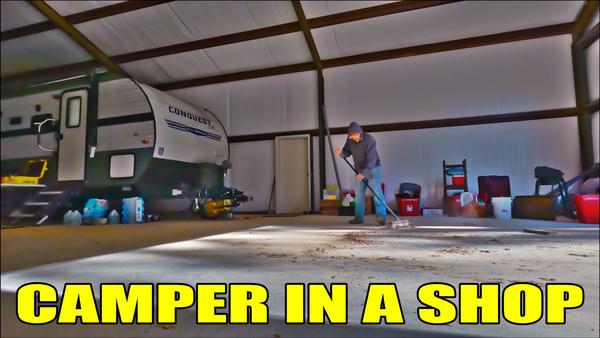
Even though we are getting electricity via a generator, the first few nights with the camper in the shop were a huge success.
We have full piped-in
water instead of those “drinking-safe” hoses that are far from drinking-safe. At the in-between property, we went through three of those hoses, and all three eventually caused skin rashes after showering. It got to the point where we had to flush the water hose for 10 minutes before we could take a shower. We think the heat from the sun was baking the inner lining and causing chemical leaching of some kind. Boy, am I glad that is behind us.
A full piped-in sewer is also a thing of beauty. At the in-between property, we were piped into a septic tank using one of those flexible camper sewer hoses. However, both of the hoses we had didn’t seal perfectly, so the lovely smell of roses engulfed the yard on those days without a breeze.
We moved the camper on December 1st and didn’t get shore power hookup until the 12th. We burned about 5-7 gallons of gasoline per night and mostly left the generator off during the day.
I made the spontaneous decision to move the camper the night
before moving it. We had a few nights in the forecast of 20-ish degree nights and I knew the garden hose supplying water to the camper would freeze. Now that we are piped in, there is no longer a worry about our water supply freezing. Since being here, the lowest outside night temperature was 19 degrees and inside the shop never got below 40.
Heating the camper is much more efficient now. Campers are just drafty—that’s all there is to it. Getting the camper out of the wind and into the shop made heating much more manageable. The land between the two had full electric hookups, so we heated the camper with two radiant oil heaters. The rear room of the camper was always noticeably colder than the rest of the camper. Now, the camper heats easily with just one radiant heater and is much more consistent front to
back.